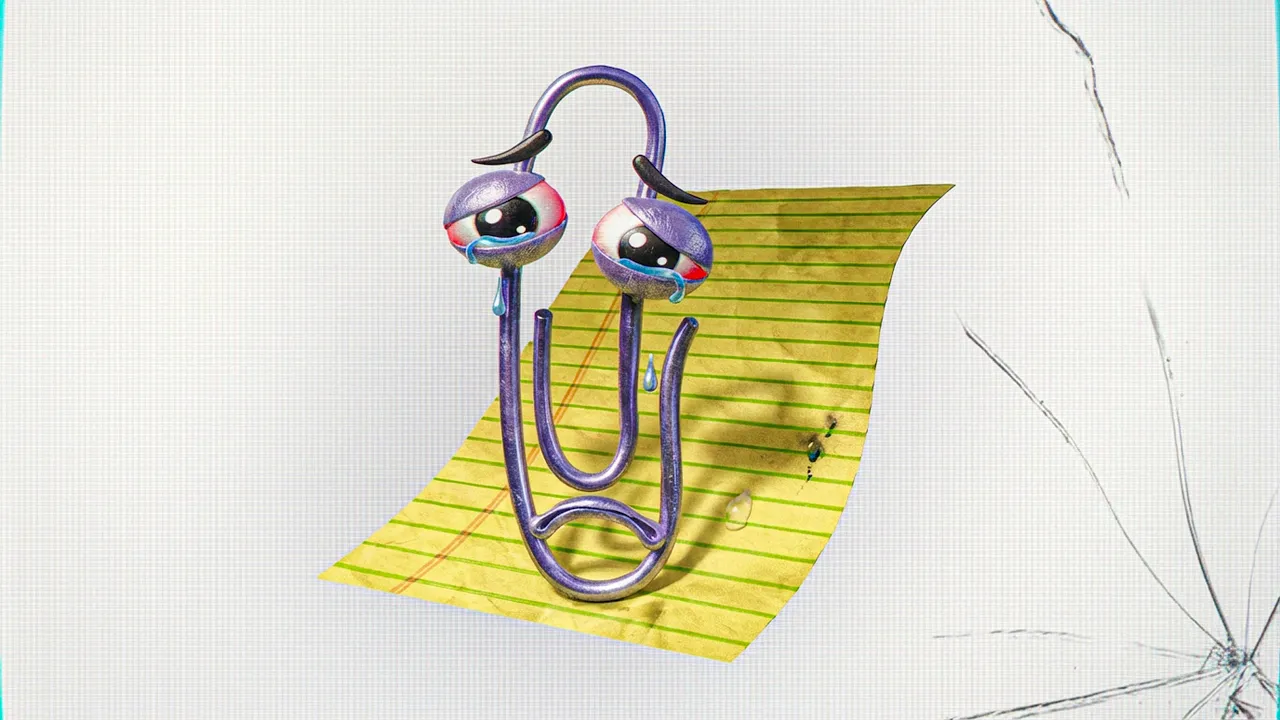
Creator: Enrico Tartarotti · Published: 2025-11-15 · Length: 17:48 · Watch on YouTube
Remember when tech was actually fun? Google barrel rolls, Winamp skins, customizing everything? Yeah, Silicon Valley killed all that. But something's changing right now and you probably haven't noticed it yet. (from the video description)
Enrico tells the story of how creators built the internet, how operators "optimized the soul out of it," and why the industry works like a pendulum that has just started swinging back toward weird, playful tech. Sponsored by Bolt.new. Written and produced by Enrico Tartarotti; editing by Seequence Studio. (The auto-captions mishear his name as "Amory" and "Mariko" and Paul Buchheit's as "Paul Boukay"; the correct names are used below.)
1) Detailed outline
[0:00] The decline of tech fun
- Type "do a barrel roll" into Google and the whole results page spins. Enrico calls it one of the last relics of an era when tech was built by nerds having fun.
- Today's tech feels lifeless, boring and "almost too perfect," and there's a specific reason Silicon Valley killed fun.
[0:22] Introduction to the topic
- Something has been happening behind the scenes: we've started going back to the fun, weird era of tech, and it's coming from an unexpected place.
- To understand it, he goes back to where it started.
[0:55] The golden age of experimentation
- 2001, Google. Google was the world's biggest magnet for talented nerds, with the motto "don't be evil," and it even tried banning managers (that didn't last). Paul Buchheit had a one-line pitch: what if email had Google search inside it? He built it for fun, not because it was on a roadmap, and it became Gmail.
- 2007, Valve. Gabe Newell paused all game development and work on Steam and turned the company into "one big creative playground" for about three months. Small teams experimented with no deadlines or deliverables, then showed their work at an internal science fair. Ideas from it ended up in Portal 2, one of Enrico's favorite games.
- People built things because they found it fun: spinning search results, the 3D shredder animation when you delete a card in the iPhone Wallet app, wild skins for no reason.
- Google's 20% time let employees spend a fifth of their week on whatever they liked, producing Gmail, Google News and AdSense (one of Google's biggest revenue sources). None came from focus groups or A/B tests.
- Steve Jobs testing the first Photo Booth on Mac in 2005, with silly real-time camera effects Apple didn't need to ship. The original Xbox dashboard menu "didn't need to hit this hard."
[2:24] Creators and customization
- This was the era of the spreading internet and early mobile (the iPhone and first Android phones), and of trying the new and wacky.
- Users were creators too. MySpace let you build a personal page with backgrounds, effects and music. It didn't look good, but it was fun.
- Enrico remembers custom Winamp skins and spending hours in high school hunting icon packs, skins and custom ROMs for his "crusty" HTC Android phone.
- Tech was fun because the people building it were having fun.
[4:09] Silicon Valley kills the fun
- Silicon Valley's message, as he puts it: you built this weird, wonderful world, but these are now trillion-dollar hyper-growth markets, so "let the pros take it from here."
- 2011: Google shuts down Google Labs, where users had tried experimental features for nine years. 2012: Google requires manager approval for 20% time. 2013: iOS 7 drops skeuomorphism. Experimentation is over; it's time to optimize.
[5:08] The era of the operator
- Companies from startups to big tech stop hiring mainly engineers who love building and start hiring MBAs, management consultants, HR and "managers of managers." The era of creators becomes the era of operators.
- Usability testing and A/B testing. Put two interfaces side by side and ask people to open settings; the plainer one wins by a few milliseconds, so the old one goes. Teams build ten variations of a button, ship the winner, and test every flow to minimize clicks for the least tech-savvy users. Textures, personality, quirks and Easter eggs become "scientifically speaking, just noise."
- Spotify as a case study: 2011 apps built on top of Spotify, 2016 messages removed, 2018 custom themes removed, 2021 the heart button replaced by a plus, probably because "some bozo in some usability test" didn't get that the heart meant save to library. Clearer, more efficient, "completely soulless."
- Instagram Stories redesign. A designer on X posted a playful concept that mimics airplane windows. A social media insider replied it would never ship: taller rectangles push the feed down, hurting view time and ad revenue, and surfacing content would make users more selective. Enrico: "This is how optimizers think."
- The actual designer behind Instagram Stories replied that they had built something like it, it performed better on business metrics, and they didn't ship it because it was "less human": people skipped friends and watched memes and celebrities. Choosing the person, not the media, was intentional.
[7:06] Optimized engagement machines
- Metrics, every pixel, every tap: this is why every product started to look the same.
- Netflix A/B tested everything for over a decade and found that bigger poster art raises click-through, horizontal scrolling increases browsing time, autoplay previews are annoying but raise engagement, and personalized algorithmic rows are harder to leave. It became "a perfectly tuned engagement machine," and competitors either optimized their way to the same result or copied it.
[8:20] The impact of corporate tech
- Creators sometimes fought back, but it didn't always land. In 2016 Gmail's April Fools' Mic Drop button showed a Minion dropping a mic and muted the thread. It sat next to the real send button, millions clicked it by accident, some missed important emails and even job opportunities, and Google disabled it and apologized.
- Startups begin with a creative spirit but end up run by operators who realize "boring is profitable." Apple made far more money in Tim Cook's operator era than in Steve Jobs's creator era.
- In the '90s and 2000s, tech drew engineers, designers and artists. In the 2010s it drew MBAs, executives, finance, HR, project managers and marketers, because that's where the money was.
- Walking through the real Silicon Valley, Enrico finds it the opposite of what you'd picture for the world's innovation center: nature, beautiful houses, calm.
[10:11] The pendulum swings back
- Usability was perfected, A/B testing mastered, apps all looked alike, and the operators thought they'd won. But it's a pendulum, not a switch.
- At Meta's headquarters (1 Hacker Way), the back of the famous sign still shows the logo of Sun Microsystems, known to older viewers for Java and on top of the world 25 years ago. It's a reminder of how fast the Valley turns over.
[10:46] Sponsor: Bolt.new
- A friend who owns restaurants hated his staff-scheduling software, so he used Bolt.new to build, with a few prompts, an app to track employee shifts that fits how his restaurants work.
- Bolt builds real, live web apps from natural-language chat. Bolt V2 adds tools once reserved for developers (the captions mention "cloud code," likely Claude Code) and a custom back end without coding. Free to try.
[11:52] AI sparks a new creative era
- What do Ilya Sutskever (OpenAI chief scientist), Geoffrey Hinton ("godfather of deep learning"), Dario Amodei (Anthropic CEO), Andrej Karpathy (led Tesla AI, ex-OpenAI), Noam Shazeer (co-author of the paper behind large language models) and Alex Krizhevsky (AlexNet, the model that showed deep nets on GPUs) have in common? Not just Google: they're all creators, stuck in the operators' decade.
- On November 30, 2022, OpenAI releases ChatGPT, the fastest-growing tech product in history. Google declares a "code red" and months later launches Bard, "one of the most disastrous product launches ever." Despite having generational AI talent, Bard was a product of the operator era.
[13:07] The return of founder mode
- The era of companies run by professionals trained to optimize everything was over, and everyone noticed.
- Brian Chesky (Airbnb) describes leading in the room like a founder, brainstorming back and forth in a "creative flow, like three founders building a product," which let Airbnb rebuild itself. "Founder mode versus manager mode" caught on like wildfire.
- Sergey Brin, who stepped down in 2019, came back to work on AI almost daily. Google Labs is back and ships new tools monthly: NotebookLM, Flow, Pomelli, Mixboard, Project Mariner, plus increasingly good Gemini models and Nano Banana. They exist because someone thought "this would be fun to build," not because a manager put them on a roadmap.
[14:27] Playful design makes a comeback
- New products are full of playful animation, depth and texture again, with effects that exist only because they're fun.
- Apple Liquid Glass, with simulated surface tension, reflections and chromatic aberration like real curved glass: no boardroom decided that; creators did.
- The onboarding screen of Perplexity's Comet browser and the shimmer effect in OpenAI's Atlas browser.
- Microsoft gave Copilot a face and personality, a Clippy-style revival, "just because it's more fun." Notion is adding personality and weird hats. Airbnb's redesign has 3D icons and "seemingly unnecessary" animation. Textures are creeping back after 15 years.
- YouTube now plays like-button animations that change with the video's topic. Necessary? No. Better conversion? No. They shipped it anyway because it's fun.
- A website footer that says, roughly, "Come on, man. Just buy the product if you came all the way here," would have been A/B tested to death five or ten years ago.
[16:01] Conclusion
- Shopify's internal message board is a 3D pole you can rotate and staple files to.
- Enrico's own Flask (video collaboration): he spent five hours on a homepage effect of waves moving in and out of a bottle as you scroll, purely because it was cool.
- New tech brands borrow imagery, logos and style from old companies instead of plain white minimal logos.
- The 2000s creators built the most influential products of the century, operators then optimized them "to the bone" for 15 years, and now we've shifted back. The people needed now ask "you know what would be so cool?", not "what's the ROI of this feature?"
- Teaser for the next video: why we get angry when Netflix raises prices by $2 but rush to buy a $1,600 iPhone every year, the story of how the price of our tech got broken.
2) Things mentioned
Google products and history
- "Do a barrel roll" Easter egg in Google Search
- Gmail (built by Paul Buchheit as a side project; 2016 Mic Drop April Fools' button)
- 20% time and what it produced: Gmail, Google News, AdSense
- Google Labs (closed 2011, now revived)
- Bard (Google's first AI chatbot)
- Revived Labs tools: NotebookLM, Flow, Pomelli, Mixboard, Project Mariner, Gemini models, Nano Banana
Apple
- iPhone Wallet card-shredder delete animation
- Photo Booth on Mac (2005)
- iOS 7 and the end of skeuomorphism (2013)
- Liquid Glass design language
- iPhone pricing (the $1,600 iPhone in the teaser)
Other apps, platforms and products
- Valve, Steam, Portal 2
- Original Xbox dashboard menu
- MySpace custom profile pages
- Winamp skins
- HTC Android phone, icon packs, custom ROMs
- Spotify (apps platform, messages, custom themes, heart-to-plus change)
- Instagram Stories (airplane-window redesign concept on X)
- Netflix (A/B-tested interface, autoplay previews, algorithmic rows, price increases)
- Meta HQ at 1 Hacker Way and the old Sun Microsystems sign; Java
- ChatGPT (launched November 30, 2022) and OpenAI's Atlas browser
- Perplexity Comet browser
- Microsoft Copilot with a Clippy-like persona
- Notion (personality and hats)
- Airbnb redesign with 3D icons
- YouTube topic-aware like-button animations
- Shopify internal 3D message board
- Flask, Enrico's video-collaboration tool (Notion plus Loom, but for video)
- Bolt.new and Bolt V2 (sponsor; natural-language app builder)
- AlexNet
Design and product concepts
- Easter eggs and playful interactions
- Skeuomorphism versus flat design
- Usability testing and A/B testing
- Engagement optimization (click-through, view time, ad revenue)
- Creators versus operators
- Founder mode versus manager mode
- The tech-industry pendulum
- Texture, depth, animation and personality returning to UI
- Retro-inspired branding for new tech companies
Places
- Silicon Valley (its quiet, leafy look)
- Meta HQ, Menlo Park
3) Biographies
Enrico Tartarotti
Italian-born YouTuber, designer and entrepreneur whose channel goes "behind the scenes of the design and psychology and stories behind the tech you use everyday." He founded Flask, a video-collaboration tool he shows in this video, and writes and produces his videos, which Seequence Studio edits.
Paul Buchheit
Early Google engineer (employee no. 23) who created Gmail, launched in 2004 after starting as a personal project. He also coined "don't be evil," later co-founded FriendFeed (bought by Facebook) and became a partner at Y Combinator.
Gabe Newell
Co-founder and president of Valve, the studio behind Half-Life, Portal and the Steam store. Enrico credits him with pausing the company for a three-month creative experiment whose ideas fed into Portal 2.
Steve Jobs
Co-founder and longtime CEO of Apple, shown in a 2005 photo testing the first Photo Booth. Enrico treats his tenure as Apple's creator era.
Tim Cook
Apple's CEO since 2011, after Jobs. Enrico uses his tenure as the example of an operator era that made Apple far more money.
Ilya Sutskever
AI researcher who co-created AlexNet, worked at Google Brain, co-founded OpenAI and served as its chief scientist. Enrico lists him among the creators held back during the operator decade.
Geoffrey Hinton
Computer scientist known as a "godfather of deep learning," who spent about a decade at Google. He shared the 2018 Turing Award and the 2024 Nobel Prize in Physics.
Dario Amodei
Co-founder and CEO of Anthropic, the maker of Claude. Before OpenAI he worked at Google Brain.
Andrej Karpathy
AI researcher who was a founding member of OpenAI and later led AI and Autopilot vision at Tesla. Enrico notes his time at Google (he interned at Google Brain and DeepMind).
Noam Shazeer
Longtime Google engineer and co-author of "Attention Is All You Need," the 2017 paper that introduced the Transformer behind large language models. He co-founded Character.AI and later returned to Google to work on Gemini.
Alex Krizhevsky
Researcher who built AlexNet with Sutskever and Hinton in 2012, showing that deep neural networks trained on GPUs could dominate image recognition. He joined Google when it acquired their startup.
Brian Chesky
Co-founder and CEO of Airbnb. His talk about leading hands-on, in "founder mode" rather than manager mode, sparked the founder-mode idea that spread across tech.
Sergey Brin
Co-founder of Google, who stepped back from day-to-day roles in 2019. Enrico notes he returned to work on Google's AI efforts almost every day.
The Instagram Stories redesign designer and critic (unnamed)
A designer on X posted an airplane-window concept for Instagram Stories, a social media insider argued it would hurt view time and ad revenue, and the actual designer behind Instagram Stories replied that a similar version had tested better but wasn't shipped because it was "less human." Enrico doesn't name any of them.