Creator: Maxinomics · Published: 2026-09-11 · Length: 27:26 · Watch on YouTube
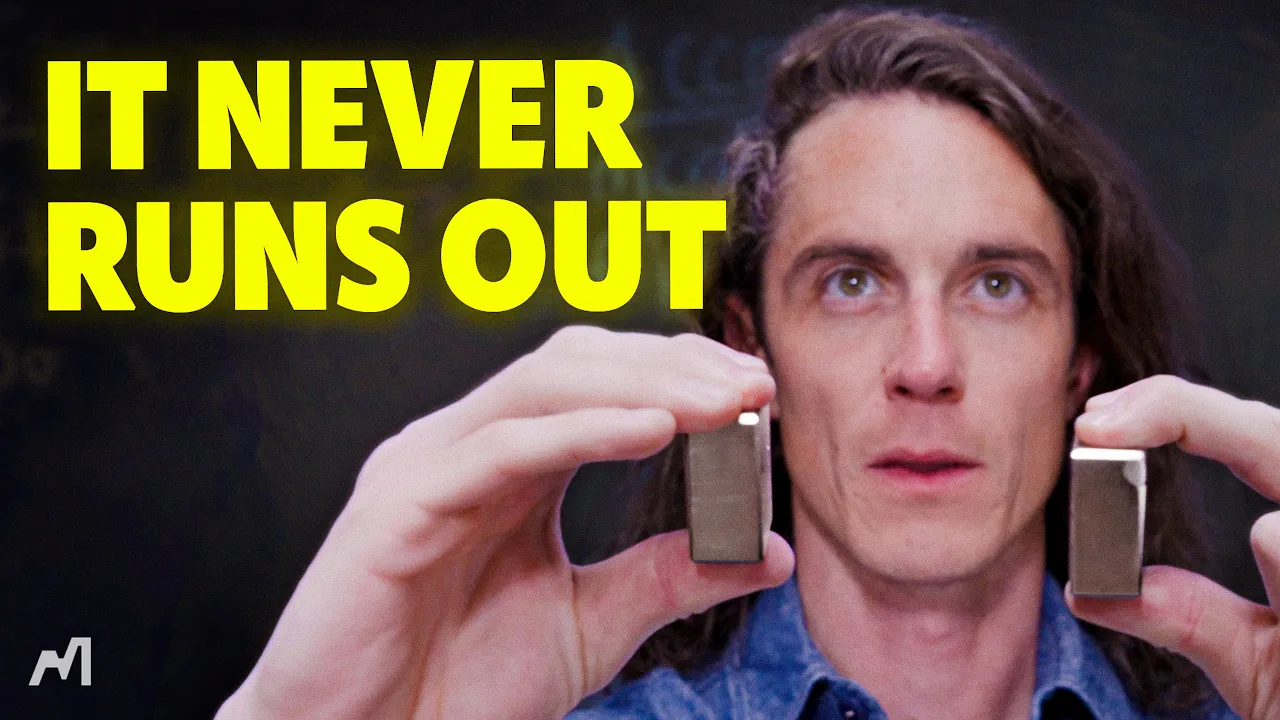
A coil of copper, a battery, and a magnet can spin until the battery dies. That quiet rotation is also why phones, cars, and missiles depend on a handful of metals that almost nobody else can turn into magnets at scale. — video description
1) Detailed outline
[0:00] Why China controls the magnets
- World's simplest motor: copper coil + battery + magnet — spins quietly with little heat until the battery dies.
- Rare-earth metals are critical because they turn ordinary metal into permanent magnets — unmatched force per waste/heat.
- Everywhere: AirPods (~6 magnets), iPhone/laptop (dozen+), EV motors (~12 lb of magnet material), U.S. missiles (≥12 rare-earth magnets for steering).
- One country controls ~94% of magnet rare earths. When people say "China has a monopoly on rare earths," this is what they mean — and what the world is scrambling to unwind.
- Sponsor teaser: Zocdoc.
[1:10] How a motor actually works
- Permanent magnet has a field; bare copper does not until current flows → temporary electromagnet.
- Two fields in one arena force each other to move → rotation (or, with a second magnet, pointing/steering instead of free spin).
- Entire electric world = this interaction, shrunk and repeated: electricity creates a field, field fights a real magnet, something useful moves.
[2:07] The magnet that changed everything
- Early magnets: iron/aluminum — heavy, not that strong, heat-limited; still powered WWII Allied radar that spotted German U-boats.
- ~25 years later: Air Force engineers combine cobalt + samarium → first rare-earth magnet — lighter, stronger, heat-tolerant, but expensive; Congo civil war spikes cobalt (~95% then of supply) +400% in under a year.
- 1983: General Motors and what became Hitachi Metals unveil neodymium-iron-boron — smaller, ~3× cheaper, more powerful.
- GM halves starter-motor size; then power windows/locks/wipers, cordless tools, laptop hard drives, phone speakers, fridge motors, EV drivetrains.
- Escape rare-earth magnets and you pay in size, weight, efficiency, or price. ~$0.96 of every rare-earth industry dollar ends in magnets — almost all flowing to China, which made zero magnets when NdFeB was invented.
[4:16] China doesn't own the dirt
- Rare earths aren't rare. Monopoly comes from doing what others wouldn't: separating them from rock.
- USGS-style deposit map: light rare earths (e.g. neodymium) common; heavy ones (incl. samarium for military heat) harder.
- Star U.S. deposit: Mountain Pass, Southern California (~2 hrs from Las Vegas) — best grade; found while hunting uranium. Scoop: ~90% ordinary rock; rest cerium, lanthanum, neodymium, etc. — only Nd (and companions) really pay; others nearly given away.
- Demo magnet ~1.5" across, ~12 lb pull; ~200 lb scoop → ~9 such magnets, or ~250 AirPods sets (earbuds need magnets for sound).
- Mountain Pass supplied GM's magnet division when NdFeB was invented — and still did when that division was spun out.
[6:50] Selling America's magnet company
- 1995: GM, in financial trouble, sells non-core Magnequench (patents, know-how, tooling, factories). Sextant had courted the deal for two years.
- CFIUS-style foreign-purchase review should catch critical suppliers; Magnequench fed dozens of U.S. military customers — documents scarce; sale looks rushed amid free-trade optimism.
- Open question: did reviewers know two Chinese firms owned 62% of Sextant, and that those firms' owners were both sons-in-law of Deng Xiaoping?
- Deng (post-Mao leader, ~12 years): "Saudi Arabia has oil; China has rare earths" — strategy to dominate the category. China had Baotou (Mongolia) + southern clay mines for military-critical heavies, but lacked process tech — until Magnequench.
[8:31] The separation problem
- Periodic table as kids lined up by height: neighbors are near-identical twins — same grip on other atoms; one chemical test won't split them.
- Sorting iron from gold = toddler vs basketball player; sorting adjacent rare earths = identical twins in matching clothes → dozens of baths, hundreds of passes, tiny nudges each time.
- Blessing: they clump in nature into deposits. Curse: hardest commercial metal family to separate — most steps, chemicals, time.
- Mountain Pass flow: pit → crush to sand → chemical baths → rare-earth concentrate; leftover water sent 14 miles via 8" pipe into desert evaporation ponds (county/state approved).
[11:24] The dirty business nobody wanted
- Over 12 years, pipe ruptured 60+ times; radioactive thorium not fully cleaned → nearly 1M gallons of toxic water spilled along the route → lawsuits, fines, bad press.
- Effectively ends rare-earth processing in the U.S. World still needs supply → Mongolian-edge Chinese mega-mine (Baotou) ramps: same thorium/toxicity, waste dumped in a mile × mile open pool; government marks rare earths top priority → can't sue critical industries; protest carries risk.
- Clean waste handling is expensive → higher Western prices → China hard to undercut. Pattern also seen in aluminum, solar, steel, ships.
[13:10] Sponsor: Zocdoc → How China builds a monopoly
- Mid-roll: Zocdoc dentist speedrun (search/compare/book in-network) vs Google scavenger hunt.
- Four-step playbook:
- Build at home — state banks lend dirt-cheap; Party owns land; volume to everyone (China, U.S., Europe) to scale mines, plants, skills.
- Shut the door — weight caps or punitive export taxes (late 2010 shock): outside prices ~4×, inside stays cheap.
- Wait (the real win) — foreign motor/phone/car/magnet makers face expensive inputs; Chinese rivals undercut; unfinished metal can't leave → foreigners pay Chinese plants and hand over drawings/recipes (Detroit/Tokyo know-how walks in). iPhone analogy: ~$9 raw materials vs ~120× finished price — money is in the finished thing; door-close forces climb rock → metal → magnet → product.
- Open the door again — WTO/trade suits take 3–5 years; China often loses but times out competitors; high prices briefly tempt new mines in Canada/Australia/U.S.; reopening floods market at prices new diggers can't match → they die; domestic firms merge into champions China Northern Rare Earth Group and China Rare Earth Group.
[16:45] Missiles, heat, and one rare metal
- Military nightmare isn't "rare earths" as a category — it's a thin slice from southern China's sticky red clay, not northern hard-rock digs.
- Cruise missile (e.g. Tomahawk): terrain-following, fin twitches = tiny motors (magnet + copper coil) at each fin base. Gulf War night one: ~100 Tomahawks in first 24 hours.
- Holding a fin with continuous current → heat (1st law of thermodynamics); magnets hate heat — lose strength, can demagnetize permanently.
- Ceramic non-RE magnets: ~3× weight and size for same power — won't fit missile redesign/certification nightmare.
- Magic ingredient: samarium (samarium-cobalt lineage) cuts temperature problem ~95%. China monopoly here ~99% (more steps, ~12× costlier to refine than Nd, rarer deposits).
- Full samarium export ban after tariffs — Chinese line about "world peace"; U.S. politicians call for Manhattan-Project-scale independence. Pentagon/Congress had warned for ≥20 years; many dismissed it as "what if."
[21:30] The day the monopoly stopped pretending
- Old bargain narrative: China takes pollution + manufacturing; West takes clean industry + dependency — felt like a clean trade until the monopoly was used.
- Monopoly rule one: don't admit you're a monopoly (De Beers, Luxottica ~95% of glasses, ASML EUV tools, Bloomberg Terminal — annoying markups, not hostages).
- Line crossed April 4, 2025: export controls as leverage — "we have monopoly, you need them, do what we want." Feels like kidnapping vs $200 Ray-Bans that cost $7.
- Factory shutdowns / supply-chain shock in the U.S.; "deliberate strategy" camp vindicated; clean-trade story replaced by cold pattern-matching (solar, cars, aluminum).
- U.S. also provoked: chip cutoffs from ~2016, clamp 2019–2020, big tariffs 2025 — but U.S. chip rise was more organic competition (Intel crushed; Japan/Taiwan hollowed 90s/2000s without a planned choke). Rare-earth move feels whiteboarded; revealing monopoly has near-zero long-term upside except wartime last-resort — and it triggers exactly the scramble underway.
[24:07] Breaking free
- Japan, Australia, and especially the U.S. move to break the monopoly.
- Pentagon take-or-pay: guarantee $110/kg (above market) so China can't flood-and-wash again; if market > $110, government takes 30% of the upside on other sales; 10-year deal — also guarantees volume, not just price (WWII aluminum analogy, but with quantity floor).
- Saga continues via Mountain Pass: mine back, plus processing/refining and an advanced facility in Texas.
- Will it work? Uncommon U.S. arrangement, not unprecedented. Subscribe CTA; sign-off.
2) Things mentioned
Companies, platforms and products
- Apple AirPods / iPhone; Ford Explorer (description); EVs; cordless tools; hard drives; refrigerators.
- General Motors (NdFeB co-inventor; starter motors); Hitachi Metals; Magnequench; Sextant (buyer vehicle).
- Chinese state champions: China Northern Rare Earth Group, China Rare Earth Group.
- Monopoly analogies: De Beers, Luxottica / Ray-Ban, ASML, Bloomberg Terminal; Intel; Japan/Taiwan chip makers.
- Sponsor: Zocdoc.
Markets, money and policy
- Magnet rare-earth share ~94% China; samarium ~99%; ~$0.96/$1 rare-earth value in magnets.
- Cobalt Congo shock +400%; NdFeB ~3× cheaper than prior RE magnets.
- 2010 export limits → outside prices ~4×.
- Magnequench sale 1995; Deng rare-earth strategy; CFIUS/foreign-investment review friction.
- Four-step industrial playbook; 3–5 year trade-case lag; WTO/trade fights.
- April 4, 2025 magnet/rare-earth export cutoff; U.S. chip restrictions 2016→2019→2020; 2025 tariffs.
- Pentagon $110/kg floor + take-or-pay quantity + 30% upside share / 10 years.
- Environmental: Mountain Pass thorium spills; Baotou waste lake; clean-up cost differential.
Materials, tech and defense
- NdFeB vs SmCo vs iron/aluminum/ceramic magnets; electromagnetism basics.
- Light vs heavy rare earths; neodymium, samarium, cerium, lanthanum, dysprosium (topics list), thorium waste, cobalt.
- Tomahawk cruise missiles (Gulf War opening night ~100); fin actuators; heat demagnetization; first law of thermodynamics.
- WWII radar / U-boats; Air Force SmCo inventors.
Places and geology
- Mountain Pass (CA); processing/refining revival + Texas facility.
- Baotou / Mongolian desert edge mine; southern China ion-adsorption red clay.
- Congo (cobalt); deposits mapped worldwide (USGS framing); Pearl River Delta electronics cluster.
3) Biographies
Maxinomics (channel / host)
YouTube economics/business explainer under Morning Brew (@Maxinomics, ~788K subs around upload). This episode is a physical-demo + geopolitics essay: tabletop motor → magnet history → industrial policy playbook → defense vulnerability. Credits: producer Phil Andrews (on-camera); editors Sebastian Vega & Greg Jacobs; motion graphics Seth Laupus; thumbnail Luca Depardon; DoPS Sam Wolf; franchise content producer Tariq Abdellatif; Morning Brew president Devin Emery.
Phil Andrews (on-camera producer)
Host/producer who demos the copper-coil motor, AirPods magnets, ceramic vs neodymium size tradeoffs, and walks the Magnequench / Mountain Pass / Baotou narrative.
Deng Xiaoping
Paramount leader of China for roughly a dozen years after Mao. Video cites his tour line equating Saudi oil with Chinese rare earths and a deliberate plan to dominate the sector; Magnequench buyers' ownership tied to his sons-in-law via Sextant.
Jeff? / military & industry figures (named as roles)
- WWII Allied radar engineers / later U.S. Air Force engineers who pioneered samarium-cobalt magnets.
- GM and Hitachi Metals teams that commercialized NdFeB in 1983.
- Unnamed Pentagon and congressional subcommittee voices who warned for decades before the 2025 cutoff proved the leverage thesis.