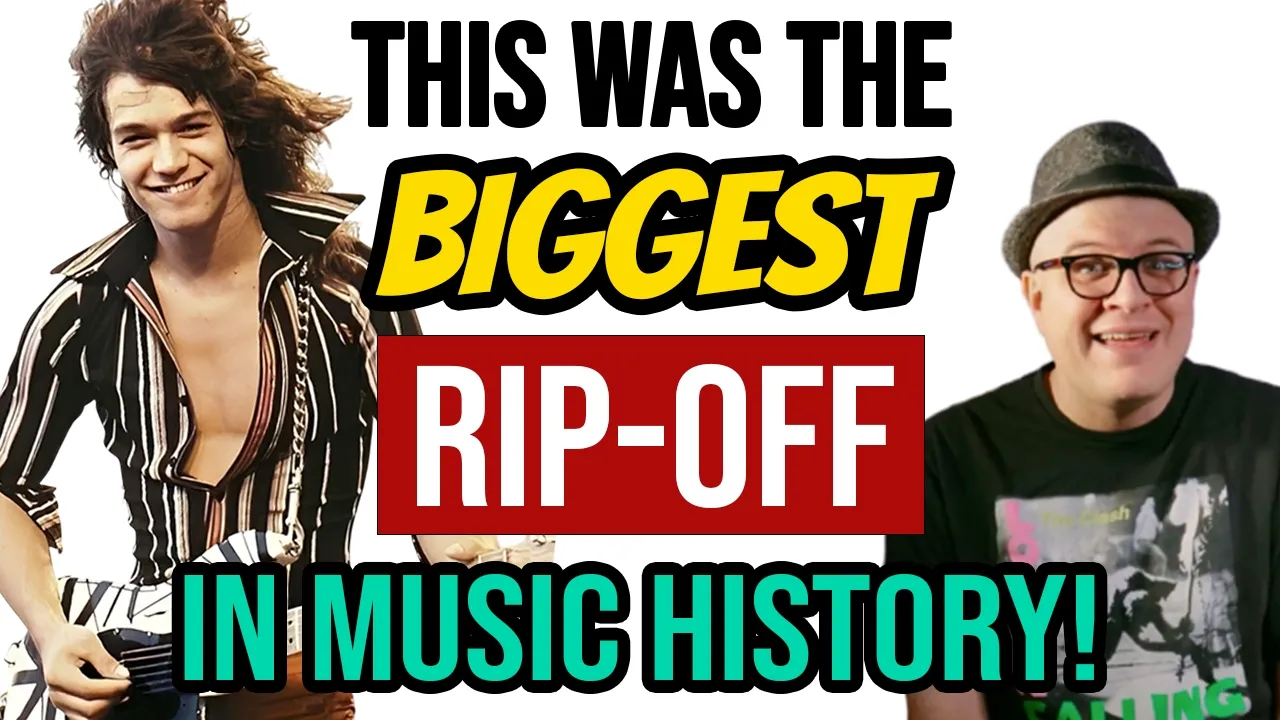
2 of the Biggest Hits of 1988 were TOTAL RIP OFFS Of Van Halen & Foreigner--Stolen by the Same Guy!
Detailed outline
Cold open / teaser
- Bottled Lightning usually celebrates one-hit wonders; today the host shakes it up: artists who followed a huge hit with a second of equal impact — then never had another. Two-hit wonders.
- Special countdown: Top 5 two-hit wonders of the 1980s.
- Tease package: “Tails” / tales featuring a comedy legend in drag; a group whose obsession-with-a-radio-DJ story goes deadly; an artist nicknamed the Ant; a civil lawsuit with a legendary guitarist in the plaintiff’s seat; and a man with a ~50-second cameo in an ’80s movie that will shock people.
- “Serious fun and nostalgia” sting → full open.
Channel framing / series
- “Hey music junkies” / Spirograph nostalgia subscribe pitch.
- Series: Bottle Lightning / Bottled Lightning — usually a song that was king for a day; today celebrate artists who “scored a deuce.”
- Professor of Rock countdown of the Top 5 two-hit wonders of the ’80s.
- Studio look (frames): lime-green wall; bright yellow wingback; black fedora; thick black glasses; white James Dean graphic tee; oversized orange/cream cassette props; pink Back to the Future Part II Hover Board; turntable; miniature red/white/black striped Frankenstrat; wooden vinyl crate (visible sleeves include The Smiths, Billy Idol, Stray Cats, Dave Brubeck, The Doors); ZENNI Eyewear for Everyone bug lower-right.
- Album-art insets rotate through the countdown (Icehouse promo sextet / Chrysalis; Icehouse Electric Blue single art; Ratt Out of the Cellar; Tone-Lōc Lōc-ed After Dark).
#5 — White Lion (Wait / When the Children Cry)
- Danish-American four-piece: Mike Tramp (Denmark) vocals; James LoMenzo bass; Greg D’Angelo drums; Staten Island guitarist Vito Bratta.
- Mike & Vito write most of the music, including breakthrough "Wait" from second album Pride.
- Signing lore: get Atlantic exec Jason Flom so drunk he agrees to sign them; Flom doesn’t back out — the “inebriated decision” pays off with a platinum record.
- Pride sessions: Vito plays the Wait solo as a drum-tracking backing pass; producer Michael Wagener gets goosebumps and keeps that take. Band also borrows an older Fender Stratocaster that once belonged to Jimi Hendrix for another album solo.
- Greg D’Angelo on demos vs. commercial polish: they risk a more commercial sound and hit platinum (1M+).
- Press compares Vito’s impossible-to-replicate fretwork to Eddie Van Halen; sets White Lion apart from Poison, Mötley Crüe, Kix (host apologizes in advance for “hair metal / glam metal” labels).
- 1986 / Steven Spielberg: White Lion hired to play a fictional band in The Money Pit (Tom Hanks, Shelley Long) — ~50 seconds / under a minute, mostly background while Hanks’ character chases a manager’s signature. Soundtrack cue "Web of Desire" (credited to White Lion and Robey / Louise Robey; transcript also garbles “Wait of Desire”); demoed that year; film soundtrack never officially released but the song plays in both band scenes.
- "Wait" → #8 Billboard Hot 100; only ~#18 Mainstream Rock (host finds that surprising).
- Second Top 40: power ballad "When the Children Cry" (third Pride single, 1988). Mike co-wrote with Vito in 1985 amid the African famine / same year as "We Are the World"; lyrics somber (“one united world under God… all the wars will end”) against America’s feel-good mood — Mike half-jokes he was a Nostradamus. Climbs to #3 Hot 100 / #7 Mainstream Rock, surpassing Wait.
- Aftermath: band disbands 1992; Vito largely leaves the public eye (ailing father; wrist injury); tensions when Mike uses the White Lion name; later a cordial business relationship; host wishes they’d tour again.
#4 — Icehouse (Crazy / Electric Blue)
- Australia’s Icehouse: singer Iva Davies goes from part-time janitor → band → Regular Records (Cindy’s indie label) in the late ’70s.
- First identity: band Flowers, debut album titled Icehouse; album name becomes the band name.
- Huge in Australia / New Zealand (11 Top 40 hits 1980–1986); U.S. success mostly eludes them until fifth album Man of Colours (1987) and breakthrough "Crazy."
- Sextet credit (liner notes): Iva Davies (vocals); Robert Kretschmer (guitar); Steven Morgan (bass); Simon Lloyd (keys/brass); Andy Qunta (piano/BVs); Paul Wheeler (“computers and percussion”).
- "Crazy" video / storyline built on Clint Eastwood’s Play Misty for Me: DJ Dave Garver, poetry on air, psychotic listener Evelyn, stalking/vandalism/murder plot. Iva-as-on-air-personality with “impressively stylish mullet”; caller asks “Do you mind if I wake you tonight?” / “Can you play Crazy for me?”; final scene is a room wallpapered with Icehouse / Iva posters — he gets the hell out. Host notes the creepiness still holds up in the social-media age.
- Crazy → #14 Hot 100 / #10 Mainstream Rock.
- Second smash: "Electric Blue." John Oates (Hall & Oates) co-writes with Iva in 1986 while Hall & Oates are on a break (Daryl’s second solo LP; Oates producing/writing; they reunite 1988 for Ooh Yeah!). Icehouse touring America ~1986; Davies at a NYC hotel bar when Oates calls; Oates flies to Australia; writes Electric Blue; warns Iva that if Icehouse doesn’t cut it, he’ll take it to Daryl — he’s sure it’s a hit. Oates builds the track from falsetto backing vocals first (surprises Iva, who usually stacks BVs last).
- Host plays his John Oates interview clip: Oates waiting on a beach while someone windsurfs; pretty girl walks toward him; he tells himself to stare at her eyes — they’re electric blue → the title.
- Electric Blue → Icehouse’s biggest U.S. hit (#7 Hot 100 / #10 Mainstream Rock); #1 in Australia; scorches the ARIA Awards (best album / most performed song territory per host).
#3 — Ratt (Round and Round / Lay It Down)
- Back to hard rock / glam: formerly Mickey Ratt, out of L.A.’s Sunset Strip.
- Core: Stephen Pearcy vocals; Bobby Blotzer drums; Juan Croucier bass (transcript also garbles “Warrior Records” near his name); twin guitars Warren DeMartini & Robin Crosby. Warren recruited at 18, drops out of school for the lifestyle.
- Breakthrough 1984: debut LP Out of the Cellar and first single "Round and Round." Host argues they were bigger than chart position — first LP often said to have sold close to 6 million; for a stretch they sat with Def Leppard and Bon Jovi; classic album cover.
- Title tease payoff / comedy legend in drag: Milton Berle’s unforgettable cameo in the Round and Round video (NYT “15 essential hair metal videos” list). Orchestrated free of charge by Ratt’s manager Marshall Berle — Milton’s nephew. Milton in his 70s, not widely recognized by MTV teens; one scene dressed as a woman as a tribute to his trailblazing drag TV bits.
- Round and Round → #12 Hot 100 / #4 Mainstream Rock (1984).
- Second (and last) Top 40: "Lay It Down" from Invasion of Your Privacy — #40 Hot 100 / #11 Mainstream Rock, summer 1985.
- Host plays Stephen Pearcy interview: road-writing after Out of the Cellar blows up — bandmates throw idea tapes into a literal pot (Robin’s tape, etc.), cherry-pick what to work on; no going home.
Host caveat before the final two
- Admits the list “isn’t really in order” / he hasn’t fully ranked #5–#2 — except whoever is at #1, whom he considers the true #1 two-hit sensation of the ’80s.
#2 — Tone Loc (Wild Thing / Funky Cold Medina) — TITLE HEAT
- “Controversial choice”; some music historians credit his wild crossover with breaking hip-hop into the masses (1989 era). Raspy rapper; later Ace Ventura cameo with Jim Carrey / South Central L.A. framing.
- Anthony Terrell Smith a.k.a. Tone Loc: mother Margaret (managed a retirement home); father James Smith died 1972; raised with three older brothers; Hollywood Professional School; teen group Triple A. Trademark rasp from vocal nodules.
- First single ever: "Wild Thing" from Lōc-ed After Dark — double-platinum cultural phenomenon.
- Host’s genre history: "Rapper’s Delight" (Sugarhill Gang, 1979) truly broke hip-hop to a mass audience; Wild Thing made it a household sound.
- Sampling controversy / Van Halen lawsuit (title half #1): uncredited sample of Van Halen’s "Jamie’s Cryin’" (host: “Jamie’s Crying”). Management requests a flat ~$5,000 fee without talking to the band — Eddie, Alex, Michael Anthony, David Lee Roth have no say and don’t know until it’s a hit on the radio. Later civil lawsuit settled out of court; Van Halen gets ~$180,000; Tone rakes in the millions; song still lives. (Cross-ref: host says they covered this in a recent Van Halen video.)
- Charts: Wild Thing → #2 Hot 100; #1 R&B/Hip-Hop; #2 Hot Rap. Pop-culture staple — used in Uncle Buck; 1991 Tonya Harding skates to the track.
- Second smash before the decade ends: "Funky Cold Medina." Writers credited: Michael Ross, Matt Dike, Marvin Young (Young MC — also "Bust a Move," also in Uncle Buck / host says “Uncle Luke” in one aside).
- Phrase lineage: Public Enemy’s Flavor Flav says “Cold Medina” a year earlier on It Takes a Nation of Millions to Hold Us Back as a bold ’80s affirmation; Beastie Boys (labelmates) adopt it as a nickname for a fuzzy navel; Flav reportedly encourages Tone to put the catchphrase in a song → Funky Cold Medina.
- Sampling controversy / Foreigner (title half #2): track is “basically one big sample” — Funkadelic "Get Off Your Ass and Jam" drum break + main guitar riff from Foreigner’s "Hot Blooded."
- Clips: Lou Gramm of Foreigner — didn’t like it; no permission; wouldn’t admit it was a Foreigner track; “strip away that stuff and it’s that song.” Tone Loc — Wild Thing’s Van Halen bit was the label / Mike Ross–Matt Dike side; Funky Cold Medina isn’t really “his” style, hence Young MC; songs jumble together in memory; got pulled out of a club by Mike Ross to cut it in a hot closet on a 16-track — catchphrase "Let's do it" is literally him answering “Tone, are you ready?” while sweating; “little apartment” session; had no idea it would crossover.
- Funky Cold Medina nearly equals Wild Thing: #3 Hot 100; #7 Hot Rap; #3 R&B/Hip-Hop.
#1 — Crowded House (Don’t Dream It’s Over / Something So Strong)
- Host’s personal favorite / the one slot he has ranked. “Back down under, or at least close to it” — assembled after the breakup of a successful New Zealand band.
- Neil Finn + Crowded House. Huge Finn fan from the Split Enz body of work onward.
- Childhood: family gatherings with older brother Tim Finn; sing all night; Neil learns guitar/piano following Tim; when Tim leaves for Sacred Heart College (Auckland boarding school), Neil plays Tim’s guitar. Family nickname for determined/ambitious Neil: "The Ant."
- Post–Split Enz breakup (1984): Neil forms The Mullanes (middle name / mother’s maiden name) with Split Enz drummer Paul Hester, The Reels’ Craig Hooper (guitar), and bassist Nick Seymour (younger brother of Hunters & Collectors’ Mark Seymour, met on the final Split Enz tour). Hooper leaves just before the debut; they rename to Crowded House.
- First U.S. smash implied/framed: "Don’t Dream It’s Over" from the debut.
- Second (and final) Top 40: "Something So Strong" — fifth single from the debut; Neil Finn + keyboardist/producer Mitchell Froom co-write (very McCartney-/Beatles-esque). First song Neil wrote specifically for Crowded House; they rework parts in the studio → Froom co-writer credit (transcript briefly says “Michael”). Demos associated with Split Enz back to 1984.
- Something So Strong → #7 Hot 100 / #10 Mainstream Rock (host: “one better than Don’t Dream It’s Over” on the rock chart).
- Near-miss third hit: "Better Be Home Soon" from 1988 album Temple of Low Men — peaks at #42 Hot 100 (hence still a “two-hit wonder” under the show’s Top-40 rule). Like Icehouse, Crowded House have many other great deep cuts that never cracked Top 40.
Close
- Host floats doing ’70s / ’60s two-hit-wonder editions; notes people might shout Mr. Mister, but they had a third hit — maybe a future three-hit-wonders show.
- CTA: drop your Top 5 two-hit wonders of the ’80s; debate his choices / Crowded House at #1; subscribe / community.
- Sign-off: "Three chords and the truth, my friends."
Things mentioned
Songs & musical artists (emphasis)
- White Lion / Mike Tramp & Vito Bratta — "Wait" (#8 Hot 100 / ~#18 Mainstream Rock; Pride); "When the Children Cry" (#3 Hot 100 / #7 Mainstream Rock; third Pride single, 1988); film cue "Web of Desire" (The Money Pit, with Robey / Louise Robey)
- Icehouse / Iva Davies — "Crazy" (#14 Hot 100 / #10 Mainstream Rock; Man of Colours, 1987; Play Misty for Me video); "Electric Blue" (#7 Hot 100 / #10 Mainstream Rock; #1 Australia; John Oates co-write)
- John Oates (Hall & Oates) — co-writes Electric Blue; beach / “electric blue” eyes origin story in host interview; Falsetto-BVs-first production trick; threat to cut it with Daryl if Icehouse passed; Hall & Oates reunion album Ooh Yeah! (1988)
- Ratt / Stephen Pearcy, Warren DeMartini, Robin Crosby, Juan Croucier, Bobby Blotzer — "Round and Round" (#12 Hot 100 / #4 Mainstream Rock; Out of the Cellar, 1984; Milton Berle video); "Lay It Down" (#40 Hot 100 / #11 Mainstream Rock; Invasion of Your Privacy, 1985)
- Tone Loc (Anthony Terrell Smith) — "Wild Thing" (#2 Hot 100 / #1 R&B / #2 Hot Rap; Lōc-ed After Dark; Jamie’s Cryin’ sample + Van Halen lawsuit); "Funky Cold Medina" (#3 Hot 100 / #7 Hot Rap / #3 R&B; Hot Blooded + Funkadelic samples)
- Van Halen — "Jamie’s Cryin’" (uncredited Wild Thing sample); Eddie / Alex / Michael Anthony / David Lee Roth unaware until radio; ~$5k management ask → ~$180k settlement
- Foreigner / Lou Gramm — "Hot Blooded" riff under Funky Cold Medina; Gramm on-camera: no permission, won’t admit it’s that song, “strip it away and it is that song”
- Funkadelic — "Get Off Your Ass and Jam" drum break in Funky Cold Medina
- Young MC (Marvin Young) — co-writer Funky Cold Medina; "Bust a Move" crossover peer; also tied to Uncle Buck in host’s aside
- Michael Ross & Matt Dike — Funky Cold Medina / Wild Thing production-label side (Delicious Vinyl era framing); Mike Ross pulls Tone from a club to cut Medina
- Flavor Flav / Public Enemy — “Cold Medina” affirmation on It Takes a Nation of Millions to Hold Us Back a year before Tone’s single; encourages the song
- Beastie Boys — adopt “Cold Medina” as fuzzy-navel nickname
- Sugarhill Gang — "Rapper’s Delight" (1979) as the true mass-appeal hip-hop breakthrough before Wild Thing made it household
- Crowded House / Neil Finn — "Don’t Dream It’s Over" (debut smash); "Something So Strong" (#7 Hot 100 / #10 Mainstream Rock; Finn–Mitchell Froom); near-miss "Better Be Home Soon" (#42; Temple of Low Men, 1988)
- Split Enz / Tim Finn — Neil’s prior band / big-brother model; Something So Strong demos back to 1984 Split Enz era
- Mitchell Froom — Crowded House keyboardist/producer; co-writer Something So Strong
- Paul Hester, Nick Seymour, Craig Hooper (The Reels) — Mullanes / early Crowded House lineup; Hooper exits before debut
- Hunters & Collectors / Mark Seymour — Nick’s older brother; Finn connection on final Split Enz tour
- Poison, Mötley Crüe, Kix — hair-metal peer set White Lion is contrasted with
- Def Leppard, Bon Jovi — host’s “they were right there with” peers for peak Ratt
- Eddie Van Halen — Vito Bratta comparison point (also the sampled VH catalog)
- Jimi Hendrix — Strat borrowed for a White Lion Pride solo
- "We Are the World" — 1985 famine-era context for When the Children Cry
- Mr. Mister — audience shout-out the host rejects for this list (they had a third hit → future three-hit-wonders idea)
- Studio-crate artists visible on camera: The Smiths, Billy Idol, Stray Cats, Dave Brubeck, The Doors (props, not segment subjects)
Albums / films / TV / labels / places
- White Lion Pride; Icehouse Icehouse (as Flowers) / Man of Colours; Ratt Out of the Cellar / Invasion of Your Privacy; Tone-Lōc Lōc-ed After Dark; Crowded House self-titled debut / Temple of Low Men; Hall & Oates Ooh Yeah!; Public Enemy It Takes a Nation of Millions to Hold Us Back
- The Money Pit (Spielberg; Tom Hanks / Shelley Long; White Lion ~50-sec fictional-band cameo)
- Play Misty for Me (Clint Eastwood; template for Icehouse Crazy video)
- Uncle Buck (Wild Thing / Bust a Move pop-culture use)
- Ace Ventura (Tone Loc / Jim Carrey)
- Atlantic (White Lion / Jason Flom); Regular Records; Chrysalis (Icehouse inset logo); Delicious Vinyl–era Ross/Dike framing
- ARIA Awards (Electric Blue / Man of Colours Australian sweep per host)
- L.A. Sunset Strip; NYC hotel bar (Electric Blue seed call); Auckland Sacred Heart College; beach windsurfing day (Oates title spark)
- Back to the Future Part II Hover Board prop; mini Frankenstrat prop
People / other
- Milton Berle — drag cameo in Round and Round video (free); manager-nephew Marshall Berle books him
- Jason Flom — drunk-sign White Lion to Atlantic
- Michael Wagener — keeps Vito’s goosebump Wait solo
- Steven Spielberg — casts White Lion in The Money Pit
- Louise Robey (Robey) — Web of Desire credit partner
- Tonya Harding — 1991 skate to Wild Thing track
- Jim Carrey — Ace Ventura context for Tone Loc
- Sponsor Zenni Eyewear; executive producer Brandon Fugal; honorary producers Steve Maddox, Thomas French, John Tanner, Robert Coen, Mark Austin, Andrea Drake (per description)
Biographies
Professor of Rock (Adam Reader)
Hosts this Bottled Lightning special: reframes the one-hit-wonder show as a Top 5 two-hit wonders of the ’80s countdown, cold-opens the Milton Berle / Play Misty / “the Ant” / Van Halen-lawsuit / Money Pit teases, walks #5–#1 with chart geekery and interview clips (John Oates, Stephen Pearcy, Tone Loc, Lou Gramm), plants Crowded House alone as his true #1, and signs off "three chords and the truth, my friends." Studio: lime-green wall, yellow wingback, fedora, black glasses, James Dean tee, cassette/Hover Board/Frankenstrat props, vinyl crate, Zenni bug; rotating album-art insets.
Beyond the video: Publicly identified as Adam Reader; YouTube/podcast classic-rock nostalgia host known for hit-story deep dives and countdown formats.
Tone Loc (Anthony Terrell Smith) — title subject
Raspy L.A. rapper whose two late-’80s crossovers are the episode’s clickbait spine. Bio beats: mother Margaret / late father James (1972); Hollywood Professional School; teen Triple A; vocal-nodule rasp. "Wild Thing" (Lōc-ed After Dark) samples Van Halen’s Jamie’s Cryin’ without the band’s knowledge — management’s ~$5k ask becomes an out-of-court ~$180k settlement while Tone banks millions; song hits #2 Hot 100 and saturates pop culture (Uncle Buck, Tonya Harding). "Funky Cold Medina" (Ross/Dike/Young MC) lifts Foreigner’s Hot Blooded (plus Funkadelic break); Flavor Flav phrase lineage; Tone’s own memory is the hot closet 16-track “Let’s do it” apartment session he was dragged from a club to finish. Host ranks him a “controversial” #2 two-hit wonder and the guy who made hip-hop household after Rapper’s Delight broke the door.
Beyond the video: Also framed via later Ace Ventura / Jim Carrey cameo; episode stays on the two-single sample-controversy lane.
Neil Finn (Crowded House / Split Enz) — host’s #1
Host’s favorite on the list. Childhood Tim Finn idolization, Sacred Heart guitar hand-me-down, family nickname "the Ant," Split Enz → Mullanes (Paul Hester, Craig Hooper, Nick Seymour) → Crowded House rename. U.S. two-hit frame: "Don’t Dream It’s Over" then "Something So Strong" (first song written specifically for Crowded House; Mitchell Froom co-write; #7 Hot 100). Temple of Low Men’s "Better Be Home Soon" stalls at #42 — the near-miss that keeps them inside the show’s two-hit rule. Host gushes over the full Finn catalog beyond the singles.
Beyond the video: New Zealand songwriter spanning Split Enz and Crowded House; episode isolates the two U.S. Top-40 smashes plus the #42 near-miss.
Iva Davies (Icehouse)
Australian frontman path: part-time janitor → Flowers → Icehouse name swap → domestic ubiquity (11 Top 40s) before U.S. breakthrough on Man of Colours. Stars in the Play Misty for Me–styled "Crazy" video (mullet DJ, poster-room stalker climax). Co-writes "Electric Blue" with John Oates after a NYC hotel-bar call and an Australia writing trip; Oates’ falsetto-first approach and “I’ll cut it with Daryl” conviction; song becomes Icehouse’s biggest U.S. and Australian hit.
Beyond the video: Long-running Icehouse leader; episode centers the two American Top-40 crossovers and the Oates collaboration story.
Mike Tramp & Vito Bratta (White Lion)
Danish-fronted / Staten Island–guitared songwriting core of White Lion. Pride era: Jason Flom drunk-sign myth; Wagener keeping Vito’s one-pass Wait solo; Hendrix Strat cameo; Eddie Van Halen press comparisons; Spielberg Money Pit fictional-band casting (~50 seconds). Hits "Wait" and famine-era ballad "When the Children Cry" (#3). Post-1992: Vito exits public life (father’s care, wrist injury); name-use tension with Mike; later cordial business ties; host wants a reunion tour.
Beyond the video: White Lion’s classic lineup also includes James LoMenzo and Greg D’Angelo as cited in the segment.
Stephen Pearcy / Ratt
Sunset Strip glam-metal frontman. Segment arc: Mickey Ratt → Out of the Cellar monster (Round and Round + Milton Berle drag cameo via manager-nephew Marshall Berle) → Invasion of Your Privacy’s Lay It Down as last Top 40. Pearcy interview clip: on-the-road tape-pot songwriting after the debut explodes — no going home.
Beyond the video: Ratt’s twin-guitar attack Warren DeMartini (teenage recruit) and Robin Crosby framed as the band’s double-barrel edge.
John Oates
Hall & Oates partner on a mid-’80s break who flies to Australia, co-writes Icehouse’s Electric Blue, invents the falsetto-BV bed, and later tells the host the beach / “electric blue” eyes origin. Offers to take the song to Daryl if Iva won’t cut it — correctly calls the smash. Contextual reunion: Ooh Yeah! (1988).
Beyond the video: Appears here as Icehouse collaborator via the host’s prior interview, not as a two-hit-wonder nominee.
Lou Gramm (Foreigner)
On-camera aggrieved source for the Funky Cold Medina / Hot Blooded half of the title: no permission, no admission it was a Foreigner track, and the naked claim that once you strip the hip-hop layer “it is that song.”
Beyond the video: Foreigner lead vocalist; episode uses him as the rock-side witness against Tone Loc’s second smash.